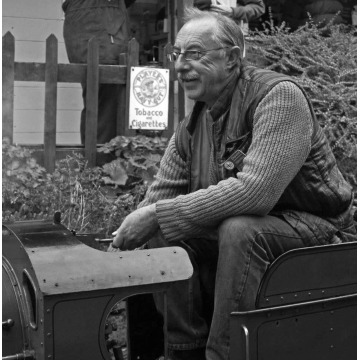
JONATHAN ROUTHJonathan Routh, who died on 4 June, 2008, was the imaginative prankster who duped the public and officials in the British version of Candid Camera in the 1960s.The show, famous for its carefully crafted hidden camera set-ups, which included the likes of a car with no engine being examined by unsuspecting mechanics and talking trees waiting for buses to Sherwood Forest, was brought to the UK by Mr Routh and became a quintessential part of British comedy during the era.Mr Routh was a bohemian figure who revelled in anarchy and irreverence and also turned his talent for the bizarre to paintings, sculptures and a series of ironic metropolitan guidebooks. Personally he was nomadic, careless with money and relationships, but he thrived on his mischievous work even when the cameras were turned off.John Reginald Surdeval Routh was born on 24 November, 1927, in the Hampshire coastal town of Gosport. His father was a British Army colonel who brought him up in Palestine, but he returned to England when he secured a scholarship at Uppingham, the Rutland school famed for its standards in the arts and sport.At Cambridge he was editor of Granta literary magazine and a member of the Footlights drama society, but left his history course after just a year.Nevertheless, he got a job with Everybody’s magazine editing their showbiz section. The publication had obviously never heard of his university pranks which included convincing hundreds of students to sign a petition protesting an imagined bypass through Bletchley Park; nor were they aware that he used their pages to invent Jeremy Feeble, an imagined 18th-century poet who was subsequently mentioned by The Times and the BBC.After becoming bored with his job, he took the unusual career move of becoming a professional prankster, advertising his services in newspapers. This led to him joining Radio Luxembourg as ‘Radio Mike’, mimicking the American format of Candid Microphone. His pranks here would frequently feature public transport, with a piano on the London Underground and a suitcase containing a wailing man in a black cab. He also tried to send himself through the post, to the exasperation of Post Office staff.Candid Camera launched on British screens in 1960. Mr Routh and fellow prankster Arthur Atkins would be out amongst the unwitting public whilst Bob Monkhouse hosted the show. The first episode featured the engineless car, a skit which became an instant classic of British comedy.Mr Routh, with his heavyset features and bushy eyebrows, was a natural straight man with both a respectable and clownish air. He captured the air of the decade with an anti-authoritarian streak as well as a subversion of Britishness – the talking red pillar box which bemused members of the public was a perfect example of both the quaint and stuffy sides of Albion’s nature.Many of his set-ups also had a subtle nature beyond the obvious joke, such as attempting to talk his way into the home of Edward Heath’s parents while posing as a naïve French tourist who thought it was a sightseeing spot. Watching the bemused tourism office staff try and explain the situation was hilarious in itself, but the real genius lay in Mr Routh’s gradual reversion to an English accent – without the staff noticing the change.The series ended in 1967 after a long-running rights battle with the original American Candid Camera producers. During the sixties Mr Routh also wrote his Good Guides, a satirical take on tourist information delivered with absolute seriousness, despite the humorous illustrations by John Glashan.Titles included The Good Loo Guide, The Good Cuppa Guide and Guide Porcelaine to the Loos of Paris, the latter of which included handy translations of unlikely toilet-related phrases. In addition he appeared in two films, Bond spoof Casino Royale (1967) and Dudley Moore’s 30 Is a Dangerous Age, Cynthia (1968).Candid Camera was revived in the mid ’70s and Mr Routh was also involved in the similar Nice Time (alongside the odd line-up of Kenny Everett and Germaine Greer), though the format had dated somewhat by this time. Naturally, however, the show would be a great influence on decades of similar programming, from Game for a Laugh to Balls of Steel.Despite his upper-class upbringing, Mr Routh became a drifter, slumming with friends and (occasionally) his four wives, with whom he had stormy relationships. He painted both out of enthusiasm and necessity, poverty forcing him to settle many of his bar and restaurant bills with his naïve style art. His work generally focussed on one of two subjects, Queen Victoria or nuns (for the simple reason that he wasn’t very good at depicting torsos), set against satirically incongruous backdrops.In 1980 he and his fourth wife, Shelagh Marvin, moved to Jamaica where they lived in a small wooden hut near Montego Bay. There Mr Routh continued to paint and sculpt in reclusion. He died in Jamaica at the age of 80. Only his second wife of the four survived him, two having died in tragic circumstances after their relationships broke down. He was also survived by two sons.
Keep me informed of updates