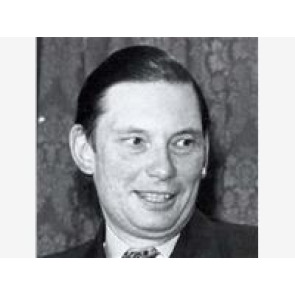
PAUL CHANNON(Lord Kelvedon), who died on 27 January, 2007, was a dedicated public servant who served under five different Tory leaders.The 23-year-old baby of the House of Commons in 1959, when elected, went on to represent his constituency until 1997, during which time he took on numerous ministerial jobs with tenacity and patience.And with a personal fortune estimated at more than £180 million in 1990, Lord Kelvedon lived a charmed life.Henry Paul Guinness Channon was born on 9 October, 1935, in London into a world of dazzling transatlantic privilege. The son of American diarist, Sir Henry “Chips” Channon and Lady Honor Channon, eldest daughter of Rupert Guinness, he spent most of the Second World War at the Astors’ family home in upstate New York.After national service in Cyprus, he went to Christ Church College, Oxford, but aged just 23, he left before he could graduate to become the fourth consecutive member of his family to represent Southend in Parliament, securinga majority of 8,000 in the 1959 Southend, West by-election.Lord Kelvedon displayed his centre-left credentials by supporting the bill to end capital punishment, and in the early 1970s, he tasted ministerial office under Edward Heath first as housing minister and then as Northern Ireland minister.Following a brief flirtation with membership of the European Parliament, Lord Kelvedon found a place in the Thatcher administration, spending seven years in junior posts at the civil service, trade and industry and transport departments, punctuated briefly but happily with two years as arts minister, when Lord Kelvedon fought to stop the export and break-up of important collections.Finally, in 1986, he secured the Trade and Industry portfolio, inheriting the fallout from the Westland helicopter affair and US takeover bids for the British car-making industry. When the Tories won a third term in 1987, he became Transport Secretary, but among small successes such as the channel tunnel scheme, road-building and rail investment, his tenure was dogged by public tragedy, including the King’s Cross, Clapham junction, Lockerbie and Kegworth disasters.After an unsuccessful attempt to continue another family tradition, this time by becoming Speaker of the House, he channelled his energies diligently as chairman of the transport committee until his elevation to the Lords as Baron Kelvedon in 1997.Lord Kelvedon was a patient, amiable and efficient minister, whose wealth and upbringing he rarely invoked, save for his office decorations—tiger-sk in sofa and black wallpaper in the 1970s, followed by some “poor Canalettos” in the '80s.Indeed, according to another former Southend MP, Sir Teddy Taylor, Lord Kelvedon was, “the one MP who was the perfect gentleman.”
Keep me informed of updates