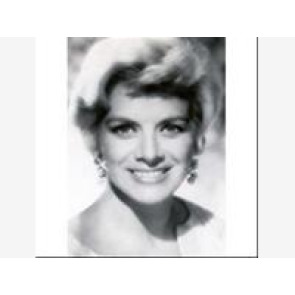
ROSEMARY CLOONEYPerhaps best known for her role in White Christmas, RosemaryClooney spent several decades as one of America ’s most popular entertainersbefore her death on 29 June 2002.An iconic singer, she notched up a long line of hit singles andwon over the public with her warm, rich voice.Also appearing on radio and the TV, the tiredness resulting from hermany occupations combined with a host of personal problems and traumas and lefther mentally unstable for a period.But she recovered enough to continue to with her career, receivingan Emmy nomination for her guest role in medical drama ER and a lifetime Grammyaward.Born on 23 May 1928 in Maysville, Kentucky, Rosemary Clooney spenta difficult childhood being shunted between her alcoholic father and mother,who – in turn – left her and her sister home alone and penniless.But, with gutsy spirit, the girls won an open singing audition ata Cincinnati radio station and were taken on for a regular slot, later joining bandleaderTony Pastor’s orchestra, with which they toured together until 1948, when hersister Betty left.She continued as a solo vocalist with Pastor but in 1949 andaged 21, keen to move her career on, she travelled to New York, where she soonsigned a deal with Columbia records, who were keen to cash in on theheightening popularity of female recording stars.While at Columbia, she met Mitch Miller, who persuaded her to record the unusual,double-entendre-laden song Come On-a My House, which, to her surprise, leapt tothe top of the charts and made her an instant household name.Having already secured a weekday radio show with famous singerBing Crosby, she won a role in the 1954 film White Christmas, where she starredalongside Mr Crosby, Danny Kaye and Vera-Ellen and helped make the highest-grossingfilm of the year.Ms Clooney’s popularity continued to soar, but in 1956, having landedher own television series - The Rosemary Clooney Show – her failing marriagecombined with her juggling of a heavy schedule and bringing up five childrenand she became addicted to tranquilizers and sleeping tablets.After divorcing her husband twice in six years, she suffered afurther setback when her close friend Robert F Kennedy, who was campaigning tobe Democratic president, was shot dead in Los Angeles, triggering a mentalbreakdown that she would struggle to recover from.Ms Clooney did not give up, however, and went on to be the pitch-personfor Coronet paper towels as well as appearing on Bing Crosby’s 50th anniversary tour in 1976, followed by a recording contract with Concord Jazzthat led to a handful of successful releases and live performances up until herdeath from cancer in 2002.There was no doubt that Ms Clooney travelled a rocky road, and sheadmitted she had felt “trapped and fabricated” struggling to maintain the imageof a woman who could have it all.But she continued to thrill and entertain audiences even throughher last years, always ready to try her hand at something new.The depth of feeling and earnestness her singing put across gainedher the ongoing admiration of greats such as Bing Crosby, who said she was “the bestin the business”.And The Wall Street Journal called her “A pop icon and spoken inthe same breath of Sinatra and Ella Fitzgerald”.
Keep me informed of updates